A night in the Sahara: what the silence teaches
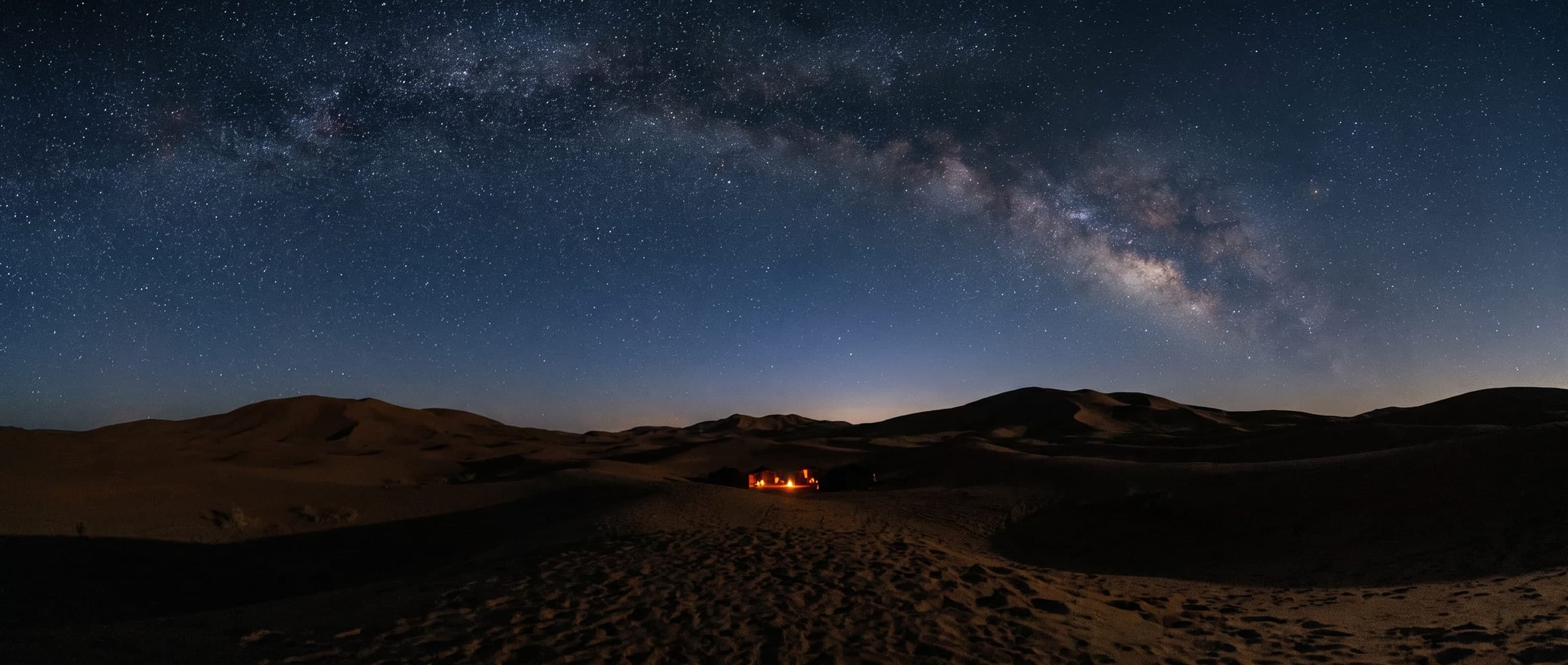
Past the last dune, the noise of the world drops away. What's left is a sky so dense with stars it feels like a homecoming.
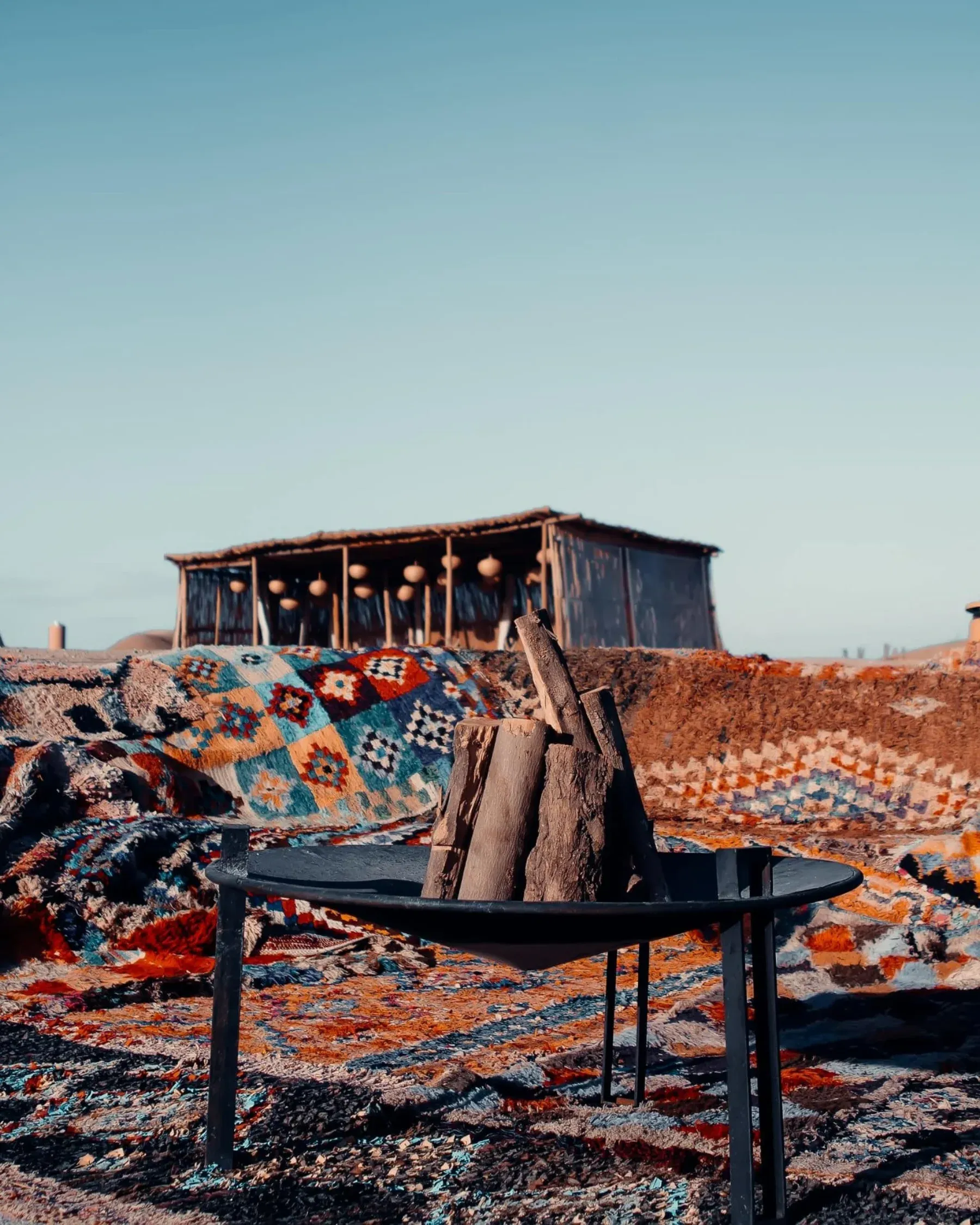
The drive to the dunes is its own ceremony — the land flattening, the light going gold, then amber, then deep blue. By the time you reach camp, the day has already let go of you.
After dinner the fire dies down and the sky takes over. No screens, no signal — just the Milky Way and the kind of quiet you can feel in your chest.
Give the road to the dunes its own day
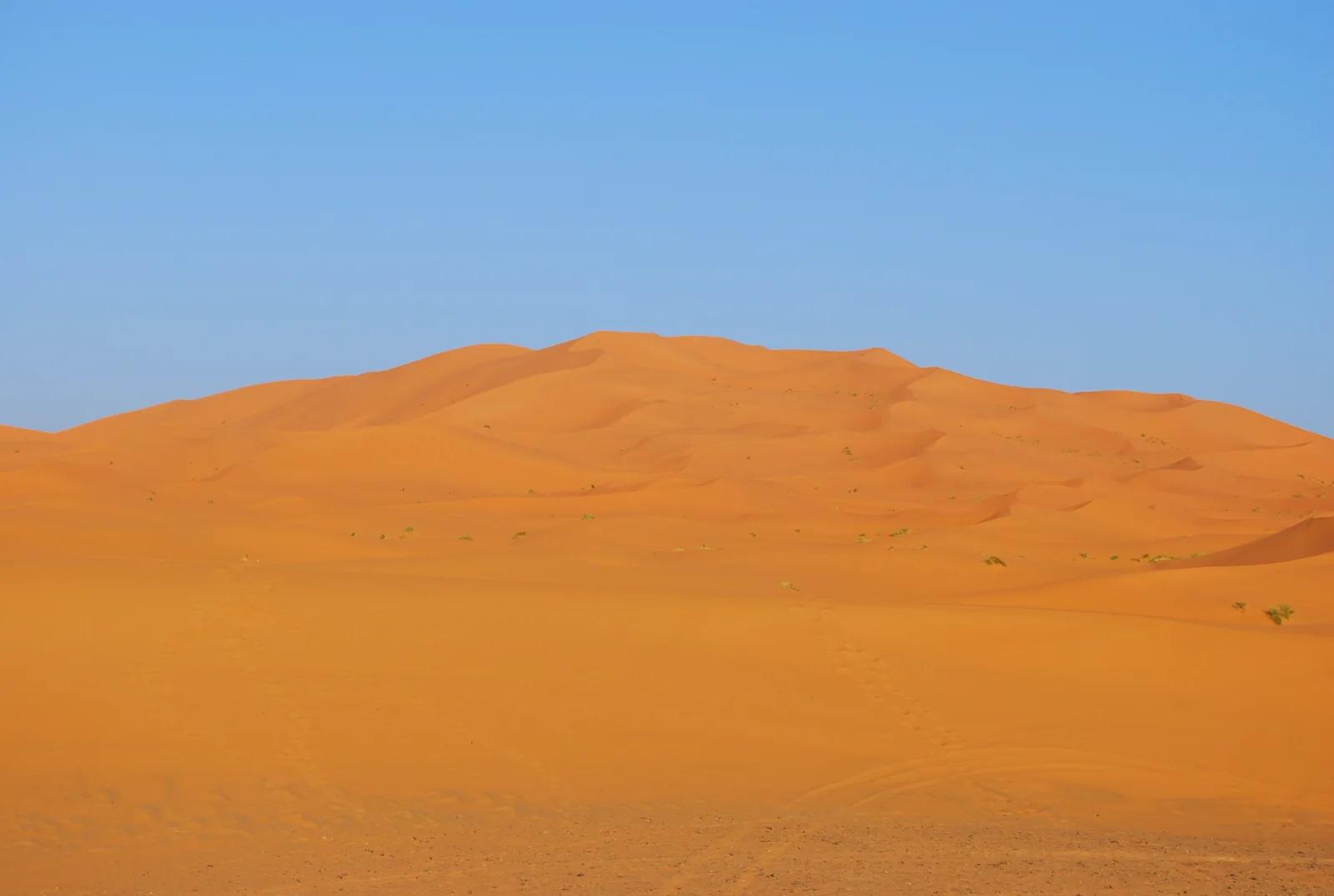
A night in the Sahara begins long before you see sand. Near Merzouga, the dunes of Erg Chebbi rise beyond the villages and palms of southeastern Morocco. If you are travelling from Marrakech or Fes, ask where you will break the drive and what time you should expect to reach the camp. Build in time to settle in before sunset so the evening can unfold at its own pace.
Find out where the road ends and how the last leg works. Some camps arrange a vehicle transfer, while others offer a walk or a dromedary ride. Ask what works for everyone in your group and which bag to carry for the night.
What a night at camp feels like
After dropping your bag, take a few minutes to notice the line between the bright sand and the first shadows. The last light often falls unevenly across the dunes. You can watch the colour change from camp or ask your host where to walk and when to head back.
After dinner, give your eyes time to adjust. If the sky is clear, look up from a spot away from the brightest camp lights. A bright moon can make the folds of the dunes easier to see, while a darker night can bring out more stars. The wind and cloud cover have a say in the evening, too.
Pack for the hours after sunset
Bring a warm layer, closed shoes, a small torch and a refillable water bottle. Keep your phone and camera in a zipped pouch if the wind picks up. Ask the camp about bedding, drinking water, bathroom access and charging before you leave. If you take regular medication, keep it with you in the overnight bag.
Leave time for the morning
Ask when breakfast and the return transfer are scheduled. If the timing allows, step outside before breakfast and watch daylight return to the ridge. Follow your host’s guidance about where to walk, ask before photographing people and carry your rubbish back with you.
When planning with Apollo Earth Travel, share your starting city, your available nights and the pace you want. Those details help determine how much time you can spend at camp and where an overnight stop on the road might fit.
Photo credits — Nomadz (CC BY-SA 3.0). Resized and converted to WebP.